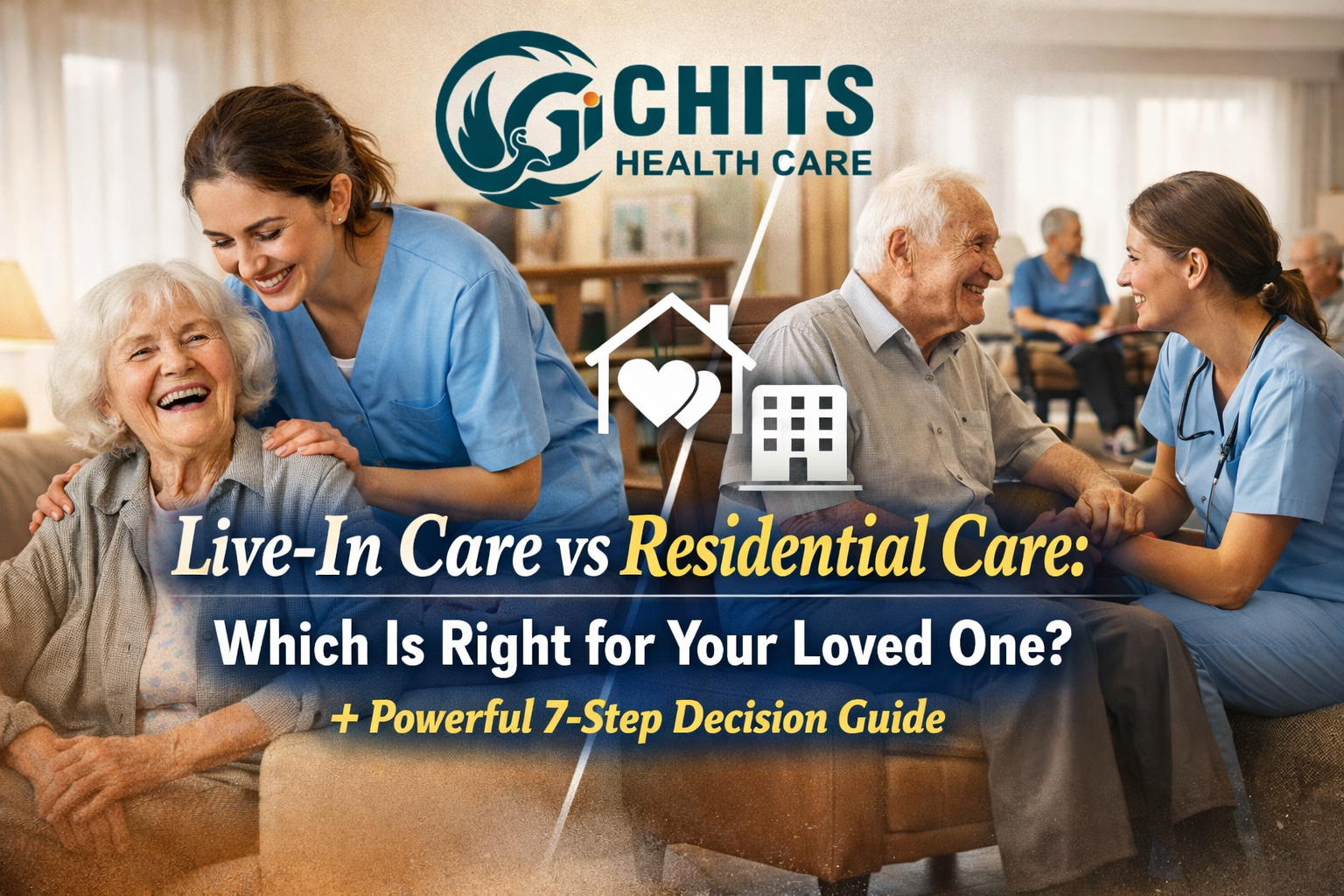
Live-In Care vs Residential Care: Choosing between live-in care vs residential care can feel overwhelming. After all, you’re not just selecting a service you’re deciding the future comfort, safety, and happiness of someone you love.
As families grow busier and healthcare needs increase, the demand for long-term care solutions has surged. But here’s the thing: not all care options are created equal. Some people thrive in the comfort of their own homes, while others benefit from structured, community-based environments.
So, how do you decide?
This guide breaks down everything you need to know about live-in care vs residential care, helping you make an informed and confident decision. Let’s explore both options in detail.
Live-In Care vs Residential Care
What Is Live-In Care?
Live-in care is a service where a professional caregiver moves into the home of the person needing assistance. This allows individuals to remain in familiar surroundings while receiving personalized, one-on-one support.
Key Features of Live-In Care
- Caregiver lives in the home
- 24/7 assistance available
- Tailored care plans
- Familiar home environment
- Flexible routines
Benefits of Live-In Care
First and foremost, live-in care offers comfort and familiarity. Staying at home can significantly reduce stress, especially for elderly individuals or those with memory-related conditions.
Another major advantage is personalized attention. Unlike care homes where staff divide time among multiple residents, live-in caregivers focus entirely on one person.
Additionally, it promotes independence. Individuals can maintain their daily routines whether it’s gardening, cooking, or simply enjoying their favorite TV shows.
Challenges of Live-In Care
Of course, no option is perfect. Live-in care can sometimes be:
- Costly, especially for round-the-clock care
- Dependent on caregiver compatibility
- Limited in advanced medical support
Still, for many families, the emotional comfort outweighs these drawbacks.
What Is Residential Care?
Residential care involves moving into a care home or assisted living facility where trained staff provide support in a shared environment.
Key Features of Residential Care
- 24/7 staff availability
- Structured daily routines
- Access to medical professionals
- Community living
- Shared facilities
Benefits of Residential Care
One of the biggest advantages is access to comprehensive care. Most facilities are equipped to handle complex medical needs, making them ideal for individuals with chronic illnesses.
Another benefit is social interaction. Residents engage in group activities, meals, and events, reducing feelings of loneliness.
Moreover, residential care offers peace of mind for families. Knowing that trained professionals are always available can be incredibly reassuring.
Challenges of Residential Care
However, there are some downsides:
- Less privacy
- Adjustment period
- Fixed schedules
- Emotional difficulty leaving home
Despite these challenges, many people find a sense of community and belonging in residential care settings.
Live-In Care vs Residential Care: Key Differences
Understanding the differences between live-in care vs residential care is crucial before making a decision.
Cost Comparison
| Aspect | Live-In Care | Residential Care |
|---|---|---|
| Monthly Cost | High (varies widely) | Moderate to high |
| Flexibility | Customizable | Fixed packages |
| Hidden Costs | Possible | Usually included |
Level of Personal Attention
- Live-In Care: One-on-one support
- Residential Care: Shared attention among residents
Social Interaction
- Live-In Care: Limited unless arranged
- Residential Care: High social engagement
Medical Support
- Live-In Care: Basic to moderate
- Residential Care: Advanced and immediate
Factors to Consider When Choosing Care
Health Condition
If your loved one requires intensive medical care, residential facilities may be better equipped. On the other hand, for mild to moderate needs, live-in care works beautifully.
Budget
Let’s be honest cost matters. Live-in care can be more expensive, but it offers unmatched personalization. Residential care might provide better value for comprehensive services.
Lifestyle Preferences
Does your loved one value independence? Or do they enjoy socializing? Their personality plays a big role in the decision.
Family Involvement
Live-in care allows families to stay closely involved. Residential care, however, reduces caregiving responsibilities significantly.
7-Step Decision Guide
Here’s a practical, step-by-step approach to choosing between live-in care vs residential care:
- Assess Medical Needs
- Evaluate Budget Constraints
- Understand Personal Preferences
- Visit Care Facilities (if applicable)
- Interview Caregivers
- Review Safety Measures
- Make a Trial Decision
This structured approach ensures you don’t miss any critical factors.
Cost Breakdown Table
| Expense Type | Live-In Care | Residential Care |
|---|---|---|
| Accommodation | Included | Included |
| Food | Separate/Included | Included |
| Medical Care | Limited | Extensive |
| Utilities | Additional | Included |
| Activities | Optional | Included |
Emotional and Psychological Impact
Let’s not overlook the emotional side of things.
Live-in care helps individuals maintain a sense of identity and control. Being in a familiar environment can significantly reduce anxiety and confusion.
Conversely, residential care fosters community and companionship. For some, this can be life-changing new friendships, shared experiences, and a renewed sense of belonging.
Safety and Quality of Care
Safety is non-negotiable.
Residential facilities often have:
- Emergency response systems
- On-site medical staff
- Structured safety protocols
Live-in care, however, offers:
- Personalized supervision
- Familiar surroundings (reducing fall risk)
- Tailored safety adjustments
Both options can be safe it ultimately depends on implementation and quality.
Ready to Choose the Right Care? Here’s Your Next Step
Making the decision between live-in care vs residential care is never easy but you don’t have to do it alone.
At CHITS Health Care, we understand that every family’s situation is unique. That’s why we provide person-centred, compassionate care tailored to your loved one’s exact needs whether it’s live-in care, elderly support, childcare, or post-hospital recovery assistance.
With over a decade of experience since 2012, our UK-based team delivers trusted care across London, Birmingham, Newcastle, Scotland, and nationwide. Every caregiver is DBS-checked, fully trained, and CQC-regulated, ensuring your loved one is in safe, professional hands 24/7.
Why families choose CHITS Health Care:
- Personalized care plans designed around your loved one
- Same-day emergency care support available
- Specialists in dementia, elderly care, and complex needs
- Reliable childcare and special needs support
- Trusted staffing partner for NHS and healthcare providers
Don’t wait until care becomes urgent.
Give your loved one the comfort, dignity, and attention they truly deserve right at home.
Contact CHITS Health Care today to discuss your needs and get a tailored care plan that works for your family.
Frequently Asked Questions
1. Which is more affordable: live-in care or residential care?
Residential care is generally more cost-effective, especially when medical support is needed.
2. Can live-in caregivers handle medical emergencies?
They can manage basic emergencies, but severe cases may require hospital care.
3. Is residential care suitable for dementia patients?
Yes, many facilities specialize in memory care with trained staff.
4. Does live-in care provide companionship?
Absolutely. Caregivers often become trusted companions.
5. How do I know if my loved one needs residential care?
If their medical needs exceed home care capabilities, it may be time to consider it.
6. Can we switch from live-in care to residential care later?
Yes, many families transition as needs evolve.
Conclusion
When it comes to live-in care vs residential care, there’s no one-size-fits-all answer. Each option offers unique advantages, and the best choice depends on your loved one’s needs, preferences, and circumstances.
If independence and familiarity matter most, live-in care may be the perfect fit. If medical support and social interaction are priorities, residential care could be the better option.
In the end, the goal is simple: ensure comfort, dignity, and quality of life.